
Local Insight is designed to be easy to use and intuitive, so it isn’t just data analysts that can find out about the context of their local communities. Public sites make it even easier to share local authority data and widen the pool of users that can benefit from robust, reliable place-based data.
Often the organisations we work with have a clear goal or reason for getting a public site: encouraging self-service across the council, providing evidence for their voluntary sector partners or to position themselves as a local knowledge hub.
We then often see the benefits and use cases expanding beyond this.
We’ve taken a look at some existing public sites from our council clients and how the outputs are being shared by councils themselves and also reused by other local organisations to support funding bids, academic work and strategic plans.
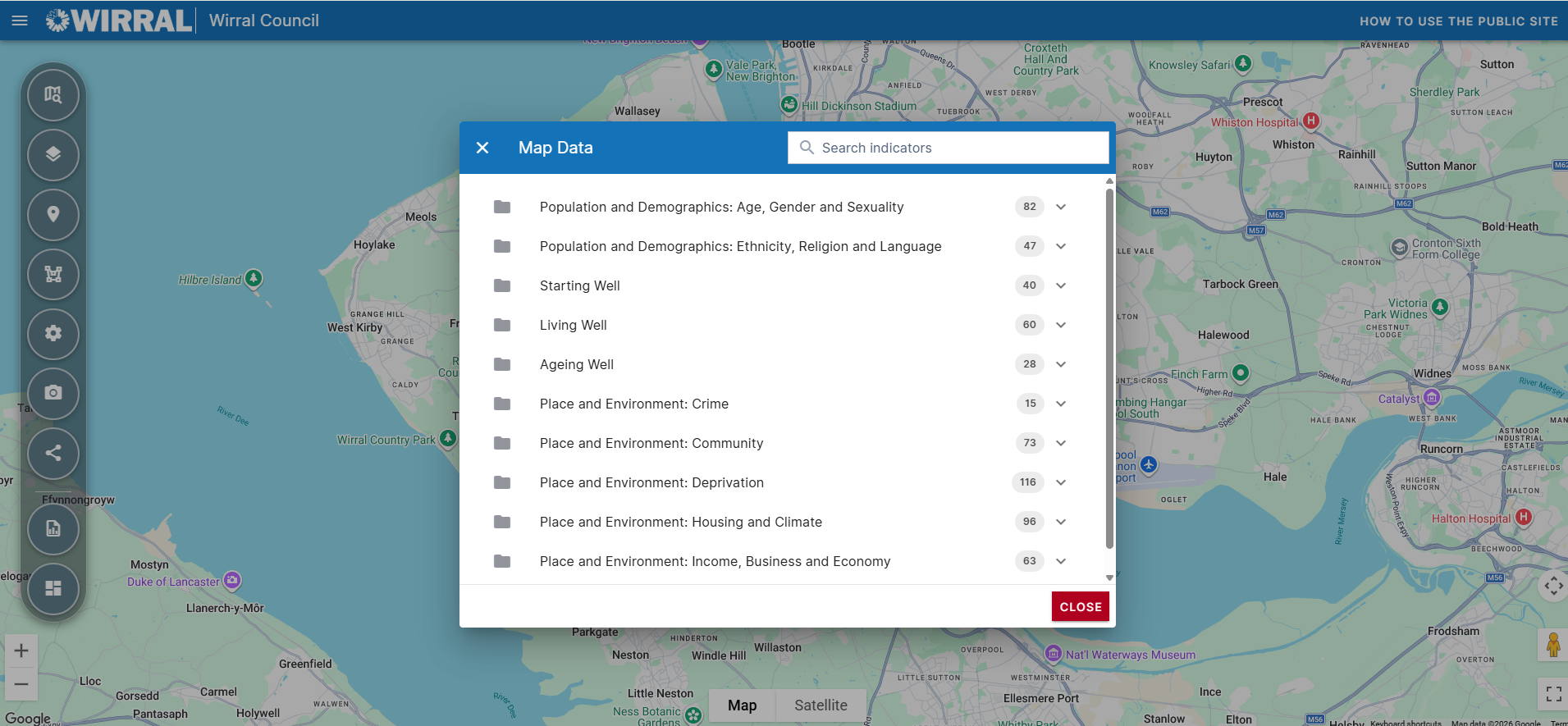
Many of our council clients have prominent links to Local Insight within their Joint Strategic Needs Assessments (JSNAs), which assess the current and future health and social care needs of the local community. Local Insight complements the JSNA with much of the health and wider determinant data in one place. While JSNA chapters may be refreshed annually or quarterly, data in Local Insight is updated more regularly and provides a resource for interested partners to find the latest data and to explore individual neighbourhoods in more detail.
How this works in practice varies across organisations:
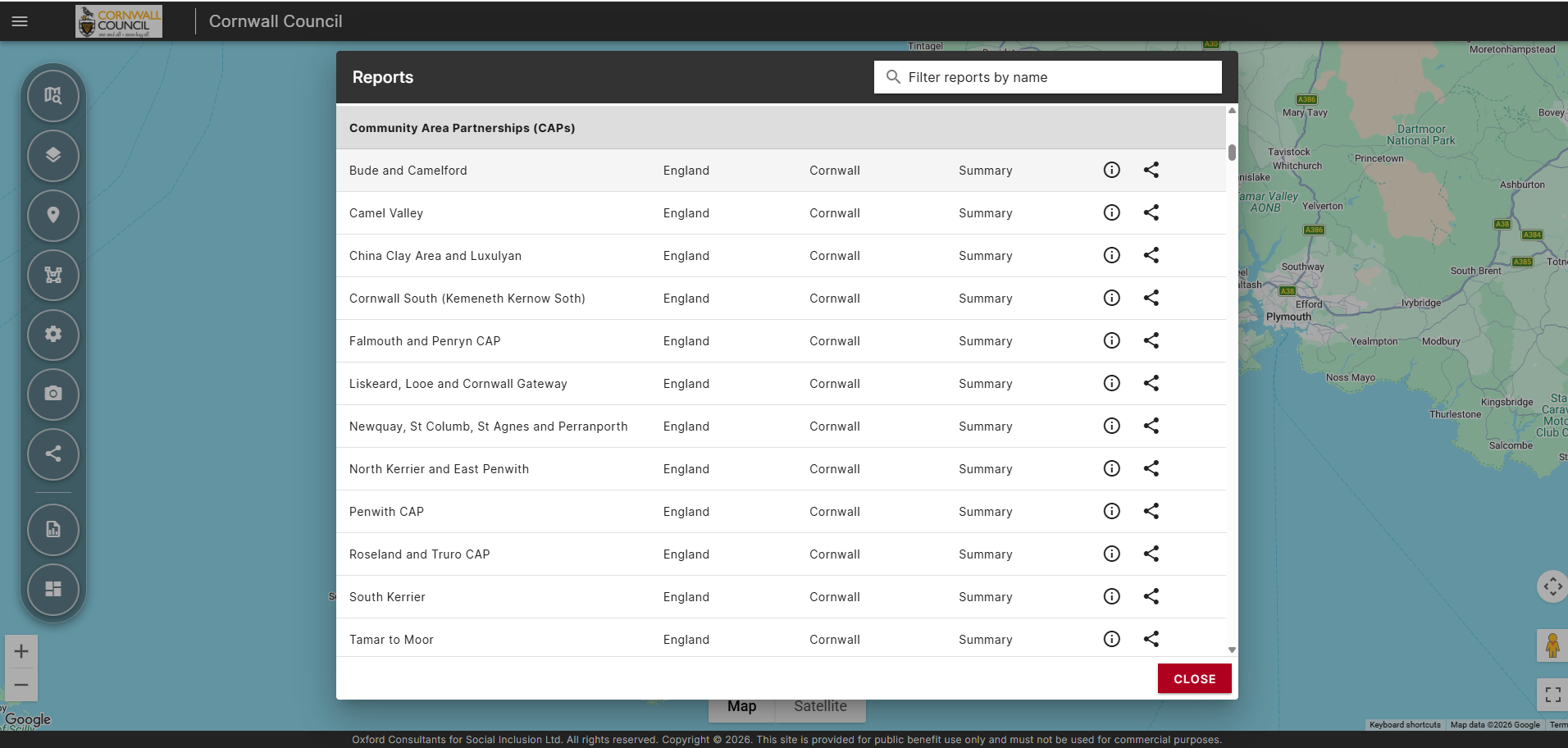
Local Insight public sites enable direct sharing of interactive HTML reports for any area. These are automatically updated with the latest data, so that when they are opened the user is always seeing the most recent data and removing the need to manually update area profile reports.
Many of our Council clients use this to provide report libraries available on their websites:
One of the biggest benefits of Local Insight is that it is a single source of truth for reliable and credible data. It means that different teams and organisations don’t need to spend time manually compiling their own statistics.
For example, Peterborough Council for Voluntary Services signpost their users to Peterborough Local Insight as a useful resource for completing funding bids and developing services. Active Suffolk also signpost their users to Suffolk Local Insight alongside other insight tools to help people navigate all the data that is out there, with a similar use case from North Yorkshire Partnerships.
Local Insight public sites are also cited in local plans and strategy, providing valuable context. Two examples from Sheffield include Sheffield and Rotherham Wildlife Trust who used statistics from Local Insight for their community profile for Manor Castle and Richmond wards and how they compare to Sheffield as a whole, bringing in data on age, population structure and the Community Needs Index. Whereas the South Local Area Committee uses data from Local Insight in their statistical profile in their community plan, highlighting demographic characteristics and where there are significant pockets of community need.
Beyond this, Local Insight is also referenced in more formal planning assessments, such as the Human Health chapter for Green Hill Solar Farm which references data from North Northamptonshire, Milton Keynes and Bedford Borough Local Insight platform.
Local Insight public sites are also being used in academic and community research pieces, such as this blog from Beautiful Enterprise that highlights data on state school participation in higher education, research from University of Liverpool on tackling inequalities through place-based policy that draws on ward level data and this academic piece on Violence reduction in a changing European urban context.
Public sites create a shared evidence base that can be explored, linked to and reused. The examples here show that when place-based data is easy to access and presented in an easy to digest way, the value extends well beyond the organisation that published it.
If you are interested in making your local data more useful to partners, communities and decision-makers, get in touch to find out how a Local Insight public site could work for your area.

With Local Insight, you can add your own locations to the map,…
More
Where might communities need more support during extreme heat? Where is nature…
More
Natural England recently launched the Index of Multiple Environmental Deprivation, or IMED:…
More